

HGRC: The Integrated Digital Ecosystem for Modern Healthcare
Strategic Guide to Clinical, Logistical and Financial Efficiency for Hospital Facilities
Introduction: Overcoming information silos in contemporary healthcare
Modern healthcare facilities, whether large public hospital groups or private clinic networks, face an unprecedented challenge: reconciling the excellence and timeliness of medical care with rigorous economic-financial sustainability. Traditionally, the main obstacle to this balance has been technological fragmentation. Departments have often operated within "information silos," using vertical software that doesn't communicate with each other: one system for admissions, one for the Emergency Room, an isolated medical record, and a separate application for accounting and pharmacy.
This digital asynchrony brings clinical risks (transcription errors, duplicate therapies, critical information unavailable in real time) and heavy economic inefficiencies (loss of unbilled services, prolonged stays due to diagnostic delays, drug waste).
HGRC (Hospital Management for small and large public or private infrastructures)
was born as a strategic response to this inefficiency. It is not a simple management software, but a unified, natively integrated digital ecosystem, designed to govern the patient's entire lifecycle within the facility, ensuring operational fluidity from the moment of first emergency access through to accounting and administrative discharge.
The Strategic Vision: The Patient at the Center of a Secure Data Flow
HGRC's commercial and functional philosophy is founded on the centrality of clinical data and its immediate availability wherever needed. Optimizing healthcare processes means reducing the bureaucratic and data-entry burden on doctors and nurses, allowing them to focus on patient care. At the same time, management receives a real-time control tool over the facility's efficiency.
The platform stands out in the market for three fundamental pillars:
- Real End-to-End Coverage: A single operating environment manages the clinical area, the logistics area and the business area, eliminating synchronization times and data duplication.
- Native Interoperability and Standardization: HGRC adopts the strictest international medical communication standards (such as FHIR R4 and HL7) and natively integrates with the Electronic Health Record (FSE 2.0), ensuring full regulatory compliance and external communicability.
- Legal Security and Privacy: The system implements granular, 100% tracked permission management, protecting sensitive data and introducing special protocols for managing confidential or VIP patients.
Detailed Analysis of the Functional Modules
HGRC's commercial architecture is structured into perfectly integrated modules, each focused on a specific area of operational value.
1. Advanced Central Registry (Registry v2)
HGRC's patient registry goes beyond the concept of a simple citizen demographic record. It is a "life-saving" information hub that profiles the patient from a clinical point of view from the very first contact.
- Immediate Clinical Summary: Upon opening the record, the operator instantly views critical information such as blood type, known drug or food allergies, chronic conditions and ongoing therapies.
- "Break-the-Glass" Security: For managing patients requiring maximum confidentiality (public figures, legal protections), the system adopts a protected access protocol. Any operator who forces the record open for emergency reasons must justify the action, generating an immutable log for security auditing.
- Consent Management and Emergency Contacts: Centralizes the collection of informed consent for data processing and alignment with FSE 2.0, clearly storing the references of family members or legal guardians.
2. Emergency & ER
The emergency department is the highest-intensity, highest-criticality area of a hospital. HGRC provides dynamic tools to manage chaos and optimize waiting times.
- Dynamic Triage: Nursing staff are guided in assigning priority codes (redistributed according to the new national guidelines). The system calculates and monitors waiting times in real time, visually flagging patients whose clinical condition requires immediate reassessment.
- Anatomical Injury Map: An interactive graphical interface allows the doctor to visually map traumas and injuries on the patient's body with a simple touch, speeding up the compilation of the ER report.
- ER Log and Quick Conversion: Every drug administered, test requested or vital sign recorded flows into an immutable chronological log. If the patient needs ordinary admission, the system allows converting the ER visit into an inpatient stay with a single click, transferring the entire medical record to the destination department without loss of information.
3. Intelligent Appointment and Schedule Planning
Resource saturation and waiting lists are one of the biggest points of friction in both public and private healthcare.
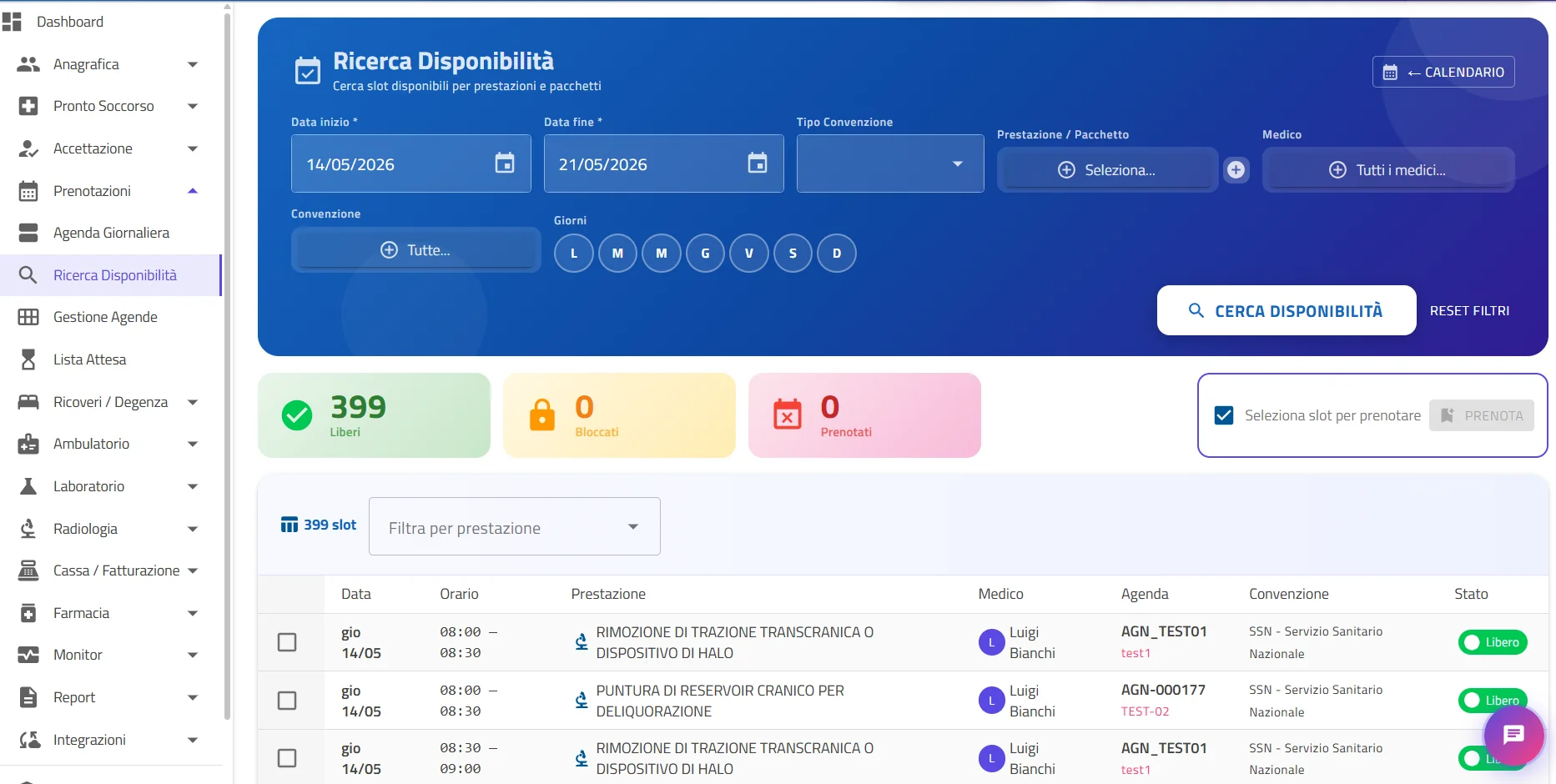
- Optimized Scheduling: The module manages complex schedules by cross-referencing the availability of the doctor, the diagnostic room and the necessary equipment.
- Priority Class Management: The system automatically sorts and allocates appointments respecting the priority classes of the medical prescription (Urgent, Short-term, Deferrable, Scheduled), optimizing flows and reducing the "no-show" phenomenon through automatic notification and recall systems for patients.
4. Ward Logistics and Bed Map (Bed Management)
The bed is the most expensive and strategic resource of an inpatient ward. Lack of real-time visibility on bed availability creates delays in admissions from the ER and logistical inefficiencies.
- Real-Time Interactive Floor Plan: HGRC offers a graphical map of each ward. At a glance, the head nurse and hospital management know the exact status of every bed: Free, Occupied, Being Sanitized (after a discharge) or Under Maintenance.
- Guided Transfer Flows: When a patient is transferred from one ward to another (e.g. from Intensive Care to General Medicine), the system guides the workflow by updating the medical record, the billing regime and automatically notifying the pharmacy and kitchen for therapy and diet adjustments.
5. Doctor Workstation and Medical Record
HGRC's digital medical record is designed to be a smooth working tool, not a bureaucratic obstacle.
- Fast, Coded Reporting: Through an advanced text editor, doctors can compile clinical logs, discharge letters and operative reports using predefined templates and native integration with the international disease classification (ICD-10).
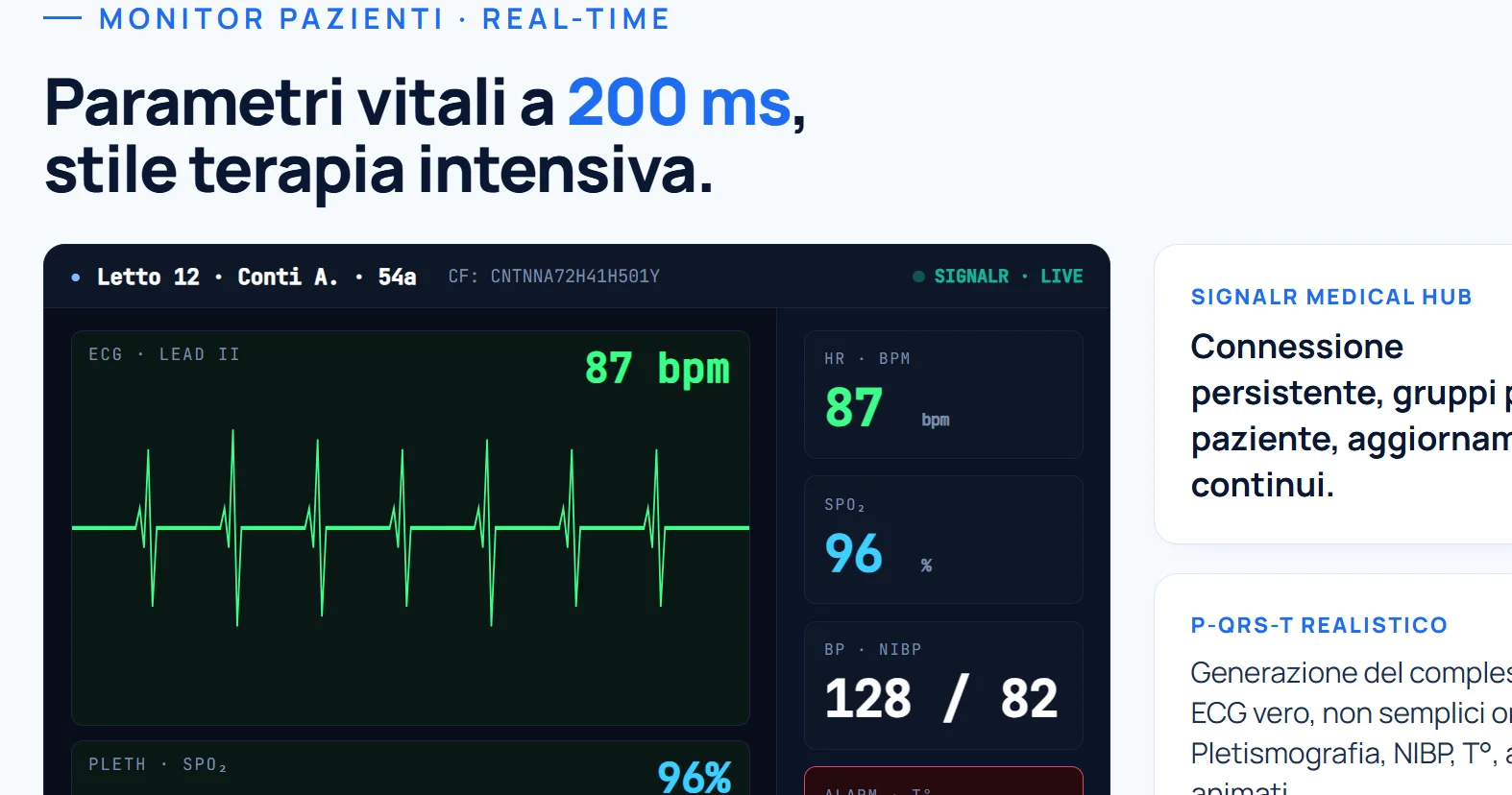
- Vital Signs Dashboard: The system aggregates blood pressure, heart rate, saturation (SpO2) and blood glucose measurements, showing trend charts that allow the doctor to identify the patient's clinical deterioration at a glance.
- Log Closure with Digital Signature: To ensure the legal value of the documentation, the system integrates digital signature workflows for the final validation of logs, reports and prescriptions.
6. Diagnostic Integration (LIS & RIS)
HGRC connects bidirectionally with analysis laboratories (LIS) and radiology systems (RIS/PACS).
- Zero Lead Leakage: When the ward doctor prescribes a radiology exam or a blood draw, the request instantly reaches the laboratory or radiology worklist.
- Panic Values and Validation: As soon as the laboratory validates the result, it appears in the medical record. In case of critical values ("Panic Values" or life-saving findings), the system sends an immediate push notification to the attending doctor's workstation to enable timely intervention. Radiology data complies with DICOM standards, allowing X-ray or tomographic images to be viewed directly from the patient's record.
7. Pharmaceutical Logistics and Administration Safety
Drug management in HGRC responds to logics of maximum patient safety and strict cost control for the facility.
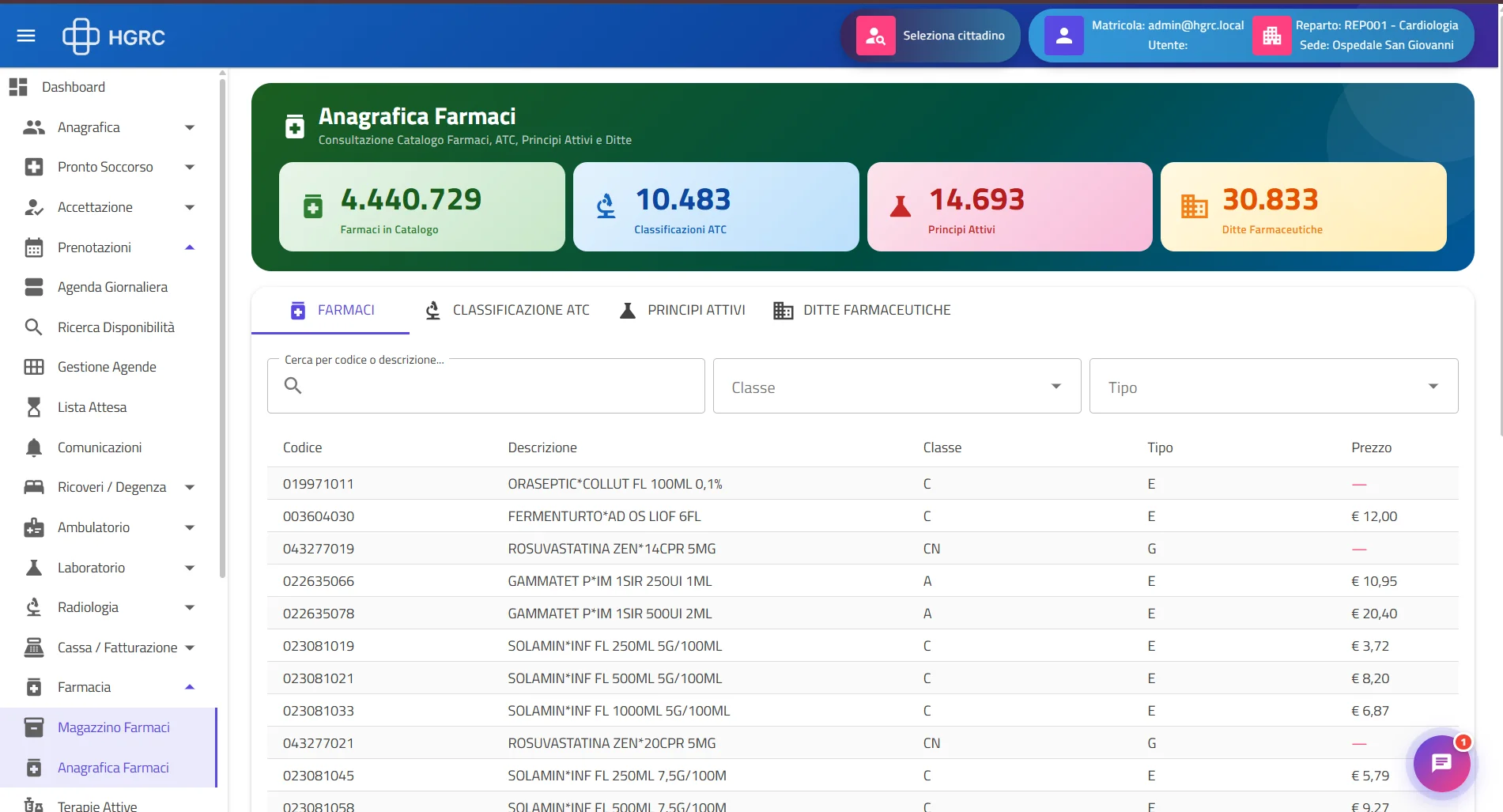
- Multi-Level Logistics (FEFO): The system manages stock starting from the hospital pharmacy's central warehouse, through ward cabinets, down to individual therapy carts. Inventory follows the First Expiry, First Out logic (the first to expire is the first to be used), drastically reducing costs related to expired drugs.
- Bedside Verification (The 5 Rights Rule): At the time of ward therapy, the nurse uses a mobile device to scan the patient's identification wristband (via barcode or DataMatrix) and then the drug code. The system performs an instant cross-check verifying the perfect match: Right Patient, Right Drug, Right Dose, Right Route of administration, Right Time. This process eliminates human error in therapy administration.
8. Financial Management: Cash, Procurement and Billing Cycle
Every clinical act has economic relevance. HGRC ensures that no service provided is lost or forgotten.
- Automatic Consumption Detection: Every syringe used, drug administered or test performed is automatically linked to the patient's account and the relevant billing code (DRG for the public system, or a custom/insurance price list for private).
- Electronic Invoicing and Agreements: The administrative module automatically calculates the shares covered by the National Health Service, deductibles for private insurance or supplementary health funds, and the co-payment share owed by the citizen. The electronic invoice is generated at the time of discharge, reducing bureaucratic waiting times.
Operational Impact and Return on Investment (ROI)
The adoption of the HGRC ecosystem within a healthcare facility produces a measurable economic and managerial impact already in the short term. Field data highlights net competitive advantages:
- 45% reduction in billing cycle times: Thanks to automatic, real-time reporting of services and consumption during the stay, administrative management can issue invoices or send reimbursement flows to regions and insurers without having to carry out long and complex manual checks after discharge. This significantly accelerates cash flow.
- 30% increase in bed turnover efficiency: Immediate visibility of bed status and automation of sanitization flows allow more patients to be accommodated with the same structural resources, minimizing dead time between a discharge and a new admission and decongesting the ER.
- Elimination of transcription errors and reduction of legal disputes: The unified record and the Bedside Verification system eliminate the need to manually transcribe therapies onto paper sheets. Fewer therapeutic errors mean a shorter average stay, greater patient safety and a drastic reduction in the risk of medical-legal disputes for the facility.
- Warehouse stock optimization: FEFO monitoring and full drug traceability reduce waste related to expired products and enable targeted purchases based on the wards' actual consumption, freeing up working capital.
Conclusions: The strategic choice for the future of healthcare
HGRC represents the ideal meeting point between the ethical and clinical needs of medical staff and the efficiency and control needs of healthcare managers. By configuring the entire facility as a single digital organism, the platform transforms data from a simple bureaucratic record into a strategic lever for growth and optimization.
Choosing HGRC means investing in a scalable, solid solution focused on operational value, capable of guiding healthcare organizations toward the efficiency standards required by the modern market, without ever compromising on patient safety.
Gallery