

Cloud computing is no longer a technology of the future or a simple alternative to company servers: in 2026, it has established itself as the invisible yet essential infrastructure of the global economy. Just like electricity in the last century, today we take the cloud for granted, but it's this global network that generative Artificial Intelligence, the Internet of Things (IoT), and the shift to hybrid work all depend on.
If moving to the cloud once mainly served to cut hardware costs, today it's the fundamental engine for the agility, security, and scalability of modern businesses.
What Is Cloud Computing?
In simple terms, cloud computing is the delivery of computing services (including servers, storage, databases, networking, software, and analytics) over the Internet. Instead of buying and maintaining physical data centers, companies "rent" these resources from leading providers, paying only for what they actually consume.
The Three Main Service Models
Cloud architecture is mainly divided into three categories, often visualized as a pyramid of services:
- IaaS (Infrastructure as a Service): The provider offers raw infrastructure resources (virtual machines, storage, networks). The user manages the operating system and applications.
- PaaS (Platform as a Service): A ready-to-use development and deployment environment is provided. Developers only need to worry about writing application code, without managing the underlying hardware.
- SaaS (Software as a Service): The software is fully ready to use and accessible via browser or app. It's the most widespread model for end users: nothing to install or update.
The Dominant Trends in 2026
The cloud landscape is constantly evolving. This year, the spotlight is on three fundamental pillars:
1. Native AI and Pervasive Artificial Intelligence
Artificial Intelligence and the cloud are now symbiotic. In 2026, major providers offer not just compute machines but integrate AI agents and advanced language models directly into their infrastructure. Renting compute power to train complex models or leveraging AI to optimize enterprise data flows has become accessible even to SMEs.
2. Edge Computing and Euro-Edge
To minimize latency, data no longer travels only to huge, centralized data centers, but is processed "at the edge" of the network, close to where it's generated (IoT devices, connected cars, smartphones). In Europe, the development of federated Telco-Edge-Cloud infrastructure is pushing companies toward ultra-secure, climate-neutral edge nodes.
3. Fully-Managed Cloud Databases and the Serverless Approach
Manual database management is disappearing. Cloud databases in 2026 offer automatic scalability: they scale to zero when there's no traffic and handle sudden spikes without crashing. This drastically reduces total cost of ownership (TCO) and eliminates hardware maintenance costs.
The Benefits for Businesses
- Cost efficiency: A shift from capital expenditure (CapEx for buying servers) to operational expenditure (OpEx), paying based on actual usage.
- Scalability and Flexibility: Compute power can be increased in a few clicks to keep pace with business growth.
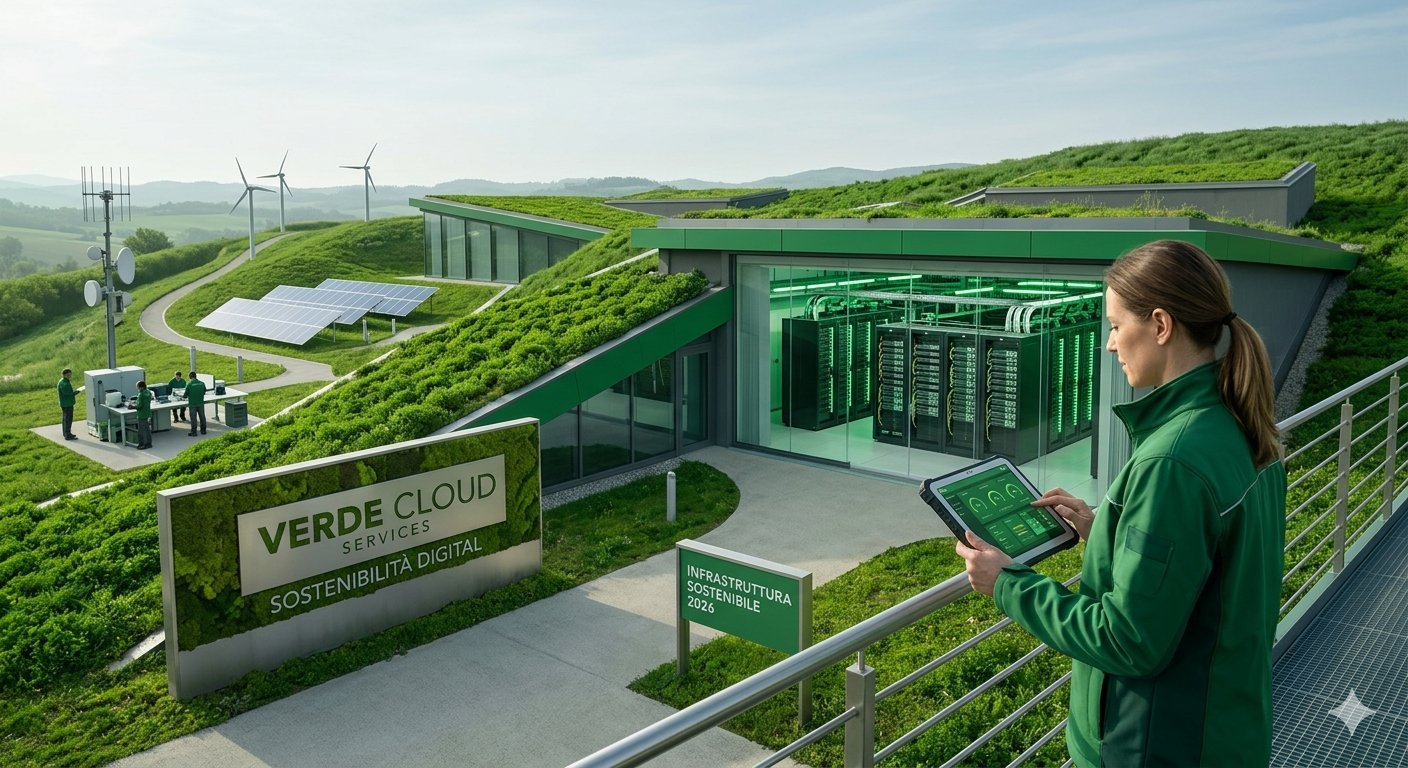
- Sustainability: Large cloud data centers are far more energy-optimized than any local company server could ever be.
- Disaster Recovery: Thanks to geographically distributed backup rules, data is safe from local hardware failures or cyberattacks.
Regulatory Challenges and Opportunities (Focus on Italy and Europe)
Despite the benefits, the cloud demands strong attention to Cybersecurity and data sovereignty. In Europe, GDPR compliance and the need to protect the digital supply chain have pushed governments to fund a secure digital transition.
In Italy, for example, targeted measures and digitalization vouchers promoted at the ministerial level have allowed thousands of SMEs and professionals to move away from old legacy systems in favor of protected SaaS and IaaS solutions, improving the cyber resilience of the entire country system.
Conclusions
Cloud computing in 2026 is no longer an optional choice but the fundamental premise for any innovation strategy. Whether it's launching a startup on a minimal budget or managing the data of a multinational corporation, understanding and mastering the cloud ecosystem is the key to staying competitive in the global market
Comments (0)
No comments yet.