

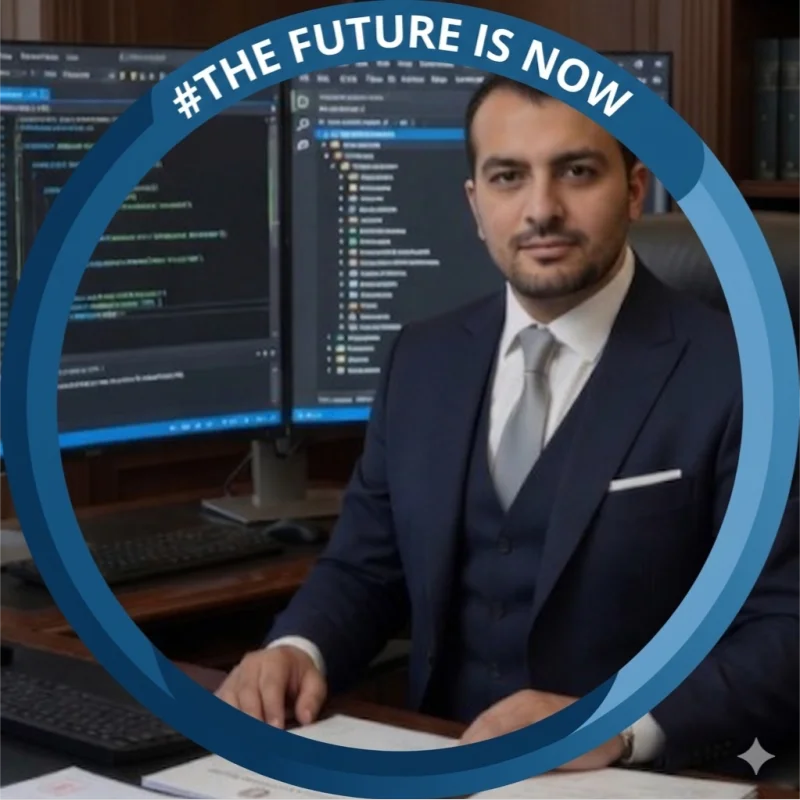
Francesco Paolo Passaro
Amministratore
Amministratore del sistema DigitalSolutions.
🏗️ Architetto software con oltre 20 anni di esperienza, sono specializzato nella progettazione e realizzazione di ecosistemi software mission-critical per settori ad alto rischio, tra cui Difesa, Intelligence, Pubblica Amministrazione e Sanità. La mia visione architettonica si è forgiata nel mondo ad alto rischio dei sistemi mission-critical per la Difesa.
🛡️Oggi, applico gli stessi framework di sicurezza nazionali e internazionali all'IA, all'IoT e alle integrazioni aziendali sicure fin dalla progettazione 🚀.
💻 Leadership pratica La mia carriera è definita da una combinazione unica di visione architettonica di alto livello e una passione costante e pratica per lo sviluppo. Non mi limito a progettare; costruisco.
🌍 Impatto globale e promozione tecnologica Ho guidato trasformazioni digitali su larga scala a livello nazionale e internazionale, garantendo che la complessità non comprometta mai la sicurezza o le prestazioni. Come sostenitore della tecnologia e curatore di notizie 📰, colmo il divario tra le tendenze emergenti, come l'IA e l'IoT, e implementazioni robuste e sicure fin dalla progettazione.
Competenze tecniche ed ecosistemi.
🌋 Sono nato a Castellammare di Stabia, in Italia. Ho vissuto in diverse città italiane, tra cui San Biagio di Callalta (TV) e Milano, e in Gran Bretagna, a Leicester e Nottingham. Attualmente vivo a Roma. Sono un ambientalista, amo gli animali e gestisco un rifugio per cani e gatti bisognosi.
🌐 Architetture: SOA, Microservizi, API REST, CQRS, Cloud-native, Event-Driven, Secure-by-Design. RabbitMQ/Kafka.
🛠️ Stack Microsoft: .NET 8/9, C#, NetCore, Blazor, Hybrid Blazor ASP.NET MVC, .NET Aspire.
☁️ Integrazione e Cloud: MuleSoft Anypoint, Salesforce, Azure, AWS, RabbitMQ, Kafka.
🤖 IA e Tecnologie di Nuova Generazione: Ollama, LLM, RAG, Kernel Semantico, Orchestrazione AI.
🔐 Sicurezza: Progettazione della sicurezza informatica, Microsoft Identity, Strategia di intelligence per la difesa, Sicurezza di rete.
📊 Dati: SQL Server, PostgreSQL, CockroachDB, MongoDB, Oracle.
⚙️ DevOps e Infrastruttura: Docker, Kubernetes, Azure DevOps, Jenkins, VMware ESXi, Proxmox.
👥 Leadership: PMP, Gestione degli Stakeholder, Coordinamento del Team, Gestione del Rischio e del Cambiamento.
Articles by Francesco Paolo Passaro
A universal token compressor and security layer for AI agents — MCP-native, 50+ languages, zero ML models required, with an optional fully offline, self-trained ML confirmation tier for privacy detection.
Stilo is a WYSIWYG HTML editor and report designer developed with C#/Blazor, born from the concrete need for a comprehensive document editor that is easily integrable into .NET projects.
From Caveman 1.3.0 to Synthelion: the mirrored C#/Python porting to compress AI tokens, to turn it into a plugin for the major AI Agents, Claude Code, Langchain, Cursors, or make it easier to use than our C# Caveman
Caveman kicks it into turbo. Cutting token costs and optimizing LLM context? Here's Caveman v1.3.0! We're truly excited to announce the release of Caveman version 1.3.0, entirely focused on an intelligent, context-aware compression pipeline
If you're tired of the usual cloud-based AI chatbots that just suggest text, Kodiin is the breakthrough you've been waiting for. It's not just a chat, but a true autonomous desktop coding agent that works directly inside your computer.
In the landscape of modern software development, especially when working closely with Artificial Intelligence and Large Language Models (LLMs), data efficiency and privacy compliance are no longer mere options, but fundamental pillars. To address these needs, Francesco Paolo Passaro (Digitalsolutions.it) has released major updates to two distinct, complementary .NET libraries: Caveman 1.0.3 and Caveman Privacy Guard 1.2.1.
After two years of heavily subsidized pricing, generative AI inference is presenting the real bill. And many companies, having never measured the actual value of each use case, are realizing they've become hostages of the cloud.
With the mass adoption of Large Language Models (LLMs) and generative artificial intelligence systems within enterprise software, developers face a crucial challenge: how to harness the power of AI without torching compliance and user data privacy? Accidentally sending a tax code, an IBAN, or an access key to an external API can be costly, both in terms of reputation and financial penalties (GDPR first and foremost).
The US government has extended the export ban on the most advanced Nvidia AI chips to Chinese companies operating outside China as well. The goal is clear: limit Beijing's technological advancement in AI as much as possible.
Anthropic has reached a valuation of nearly $965 billion, surpassing OpenAI for the first time
Nvidia launches the new RTX Spark chip: artificial intelligence arrives on everyone's PC
In modern web development, the need to update the user interface in real time is now standard. Historically, the simplest (but least efficient) approach has been HTTP Polling, in which the client bombards the server with requests at regular intervals.
Cloud computing is no longer a technology of the future or a simple alternative to company servers: in 2026, it has established itself as the invisible yet essential infrastructure of the global economy. Just like electricity in the last century, today we take the cloud for granted, but it's this global network that generative Artificial Intelligence, the Internet of Things (IoT), and the shift to hybrid work all depend on.
A guide to design patterns in C# in 2026: which are obsolete, which are baked into the .NET runtime, and how to write modern code without false dogmas.
Discover how neural networks are revolutionizing artificial intelligence and what applications are changing our daily lives.
Discover how neural networks are revolutionizing the world of artificial intelligence and which applications are changing our daily lives.
A comprehensive overview of the most innovative AI tools for software developers, with pros and cons of each.
.NET 11 officially enters the phase where "things get serious"
The evolution of AI language models is accelerating. Here's what we can expect from the next generations of GPT and similar models.
The year the global economy made the definitive leap from a paradigm simply "assisted by AI" to one entirely "AI-native". Until recently, generative artificial intelligence was a tool mainly used to speed up code writing or optimize reports
The world of web development is constantly evolving. Discover the frameworks and trends that will dominate 2026.
With the transposition of Directive (EU) 2022/2555 (NIS2) through Legislative Decree 138/2024, Italy has strengthened its approach to cybersecurity, giving the National Cybersecurity Agency (ACN) a central role in defining and overseeing measures, in line with what is required at the European level.
Everything you need to know about cloud computing: from fundamentals to migration strategies for modern businesses.
From smart homes to wearables, discover how technology is influencing our daily lifestyle.
Just a few years ago, talking about "technology applied to lifestyle" conjured images of rooms full of cables, relentless smartwatch notifications, and complex gadgets to configure. In 2026, the scenario has changed radically. Technology has become "quiet," blending into our routines so naturally it's become nearly invisible. Today it's no longer us who have to learn to use devices; it's the devices that learn to know us.
Cyber threats are evolving rapidly. Here are the latest trends in cybersecurity and how to protect yourself.